
Punjab Approves Rs. 50 Billion Hospital in Rawalpindi
The Punjab government has approved the Kulsoom Nawaz Sharif General Hospital in Rawalpindi. It will be a 3,000 bed teaching hospital, built at an estimated cost of Rs. 50 billion.
The site is the former Government Transport Service terminal on Peshawar Road in Chohar Harpal, Rawalpindi Cantonment. This land had stayed unused for almost 35 years.
According to official briefings, the project could become one of the largest public hospitals in North Punjab. It is designed to serve people from Rawalpindi, Attock, Chakwal, Taxila, and Murree.
What Has the Punjab Government Approved?
The hospital will sit on 36 kanal of government owned land. Officials describe it as an international standard teaching hospital with treatment across many medical specialties.
A PC-1 has already been prepared and submitted for planning approval. Recent planning documents link construction discussions to the 2027 and 2028 financial year, though earlier statements had suggested an earlier start.
Why This Rawalpindi Hospital Project Matters
Healthcare demand in Rawalpindi has grown fast over the past two decades. Public hospitals here already treat patients from Attock, Chakwal, Jhelum, Murree, parts of Azad Jammu and Kashmir, and nearby Khyber Pakhtunkhwa.
This wide catchment area puts heavy pressure on emergency rooms and outpatient clinics. The new hospital aims to ease that load by adding thousands of beds and specialist services.
Rawalpindi sits where Punjab, Khyber Pakhtunkhwa, and Azad Kashmir meet. So any upgrade to its healthcare system has an impact far beyond one city, a point also raised in World Health Organization guidance on strengthening regional health systems.
Why the Peshawar Road Site Was Chosen
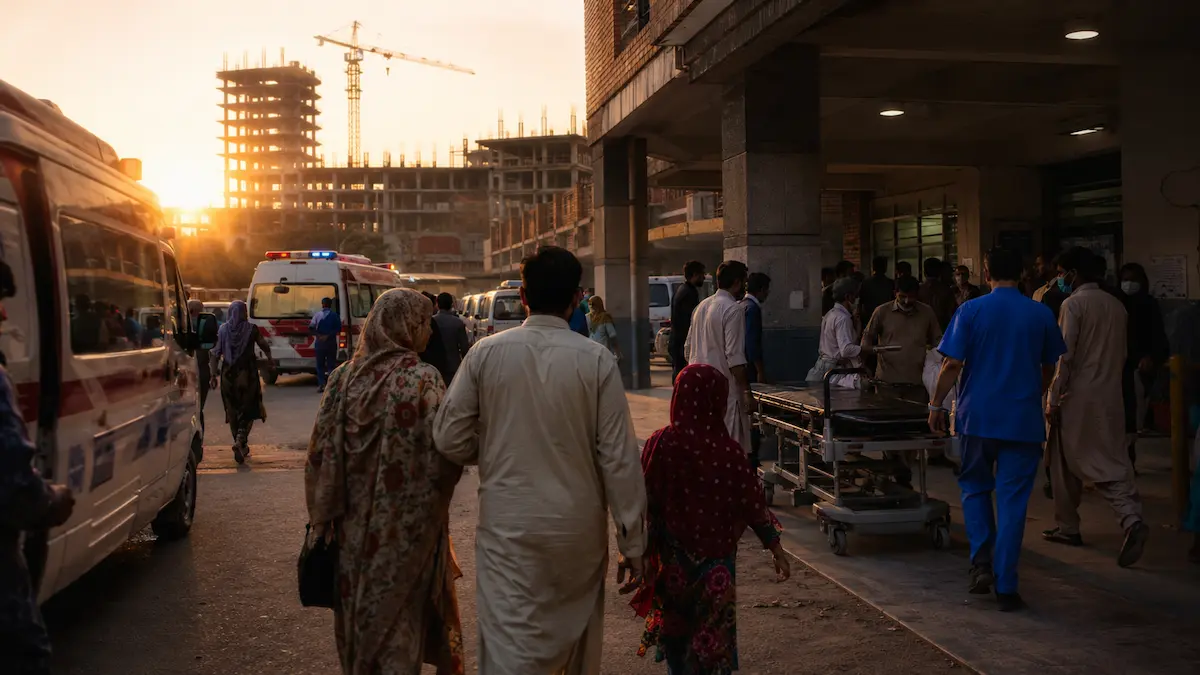
The chosen site lies near Chohar Chowk, a route that connects Rawalpindi with Taxila, Attock, Islamabad, Hasan Abdal, and the motorway network.
Using this government owned plot means the province avoids lengthy land acquisition, a process that often delays big projects. Readers who have followed how planning delays affect public works may also want to see how Punjab’s monsoon early warning system was tested this year.
The location should also help ambulances reach the hospital faster, since it connects directly to several major roads.
Planned Facilities and Medical Services
Official project briefings list a wide range of departments planned for the new hospital.
| Planned Facility | Purpose |
|---|---|
| 13 Operation Theatres | Major and specialized surgeries |
| Dual Emergency Departments | Faster emergency and trauma care |
| Large Outpatient Department | Daily consultations across specialties |
| Cardiology Unit | Heart disease diagnosis and treatment |
| Nephrology Department | Kidney care and dialysis services |
| Neurosurgery | Brain and spine procedures |
| Orthopedics | Bone and joint treatment |
| Maternity Services | Women’s and maternal health |
A Teaching Hospital for Future Doctors
The hospital is planned as a teaching facility, not just a treatment centre. Official plans include academic spaces and housing for doctors and nurses in training.
Teaching hospitals train medical students and specialists while treating patients. This model helps build Punjab’s long term healthcare workforce, not just its buildings.
How It Compares With Existing Rawalpindi Hospitals
Rawalpindi already relies on Holy Family Hospital, Benazir Bhutto Hospital, and Rawalpindi Teaching Hospital. These institutions serve patients from well beyond the district.
The new hospital is expected to add capacity alongside these facilities, not replace them, giving the city a much larger combined bed count for public healthcare.
Lessons From Past Delays
Rawalpindi has seen major health projects face delays before. The city’s Children’s Hospital, first launched as the Mother and Child Hospital, went through several redesigns before nearing completion.
This history is why many residents are watching the new project’s planning and funding stages closely, rather than only the announcement itself.
What Happens Next
Officials say the project must still clear planning approval, budget release, tendering, construction, equipment installation, and staff recruitment before it can treat patients.
As with other public spending updates, such as the recent BISP digital wallet withdrawal fee update, the real test will be how fast approvals move from paper to practice. Related sectoral decisions, like the gas connection ban review after August, show how much public projects in Pakistan depend on budget timing.
Project Summary
| Category | Details |
|---|---|
| Project | Kulsoom Nawaz Sharif General Hospital |
| Estimated Cost | Rs. 50 Billion |
| Planned Capacity | 3,000 Beds |
| Location | Former GTS Terminal, Peshawar Road, Rawalpindi Cantonment |
| Land Area | 36 Kanal |
| Current Status | Approved, PC-1 submitted for planning approval |
Frequently Asked Questions
Where will the Kulsoom Nawaz Sharif General Hospital be built?
The hospital is planned for the former Government Transport Service terminal on Peshawar Road near Chohar Harpal in Rawalpindi Cantonment.
How many beds will the hospital have?
According to official project information, the hospital is planned with a capacity of 3,000 beds.
How much will the project cost?
The estimated project cost announced by the Punjab government is Rs. 50 billion.
Will the hospital also train doctors?
Yes. Official plans describe it as a teaching hospital that will support medical education alongside patient care.
Which areas are expected to benefit?
The hospital is expected to serve patients from Rawalpindi and nearby districts including Attock, Chakwal, Taxila, Murree, Fateh Jang, and Hasan Abdal, depending on referral systems and available services.
Has construction started?
No. According to official briefings, the project has been approved and the PC-1 has been prepared. Construction will begin after planning approvals, funding, and procurement requirements are completed.
The approval of the Rs. 50 billion Kulsoom Nawaz Sharif General Hospital marks one of the largest planned public healthcare investments in North Punjab in recent years. The project has entered the planning stage, with further approvals, funding decisions, and construction still to come.