
Punjab Monsoon Alert System: What Has Changed
Punjab’s decision to activate its early warning system before the peak monsoon period marks a shift in approach. The province is now trying to prevent flood damage instead of only responding after it happens.
The provincial government has told departments to finish flood response preparations. Officials are watching for heavy rainfall, windstorms, and sudden downpours across several cities and parts of the Potohar region.
Why Urban Flooding Worries Officials the Most
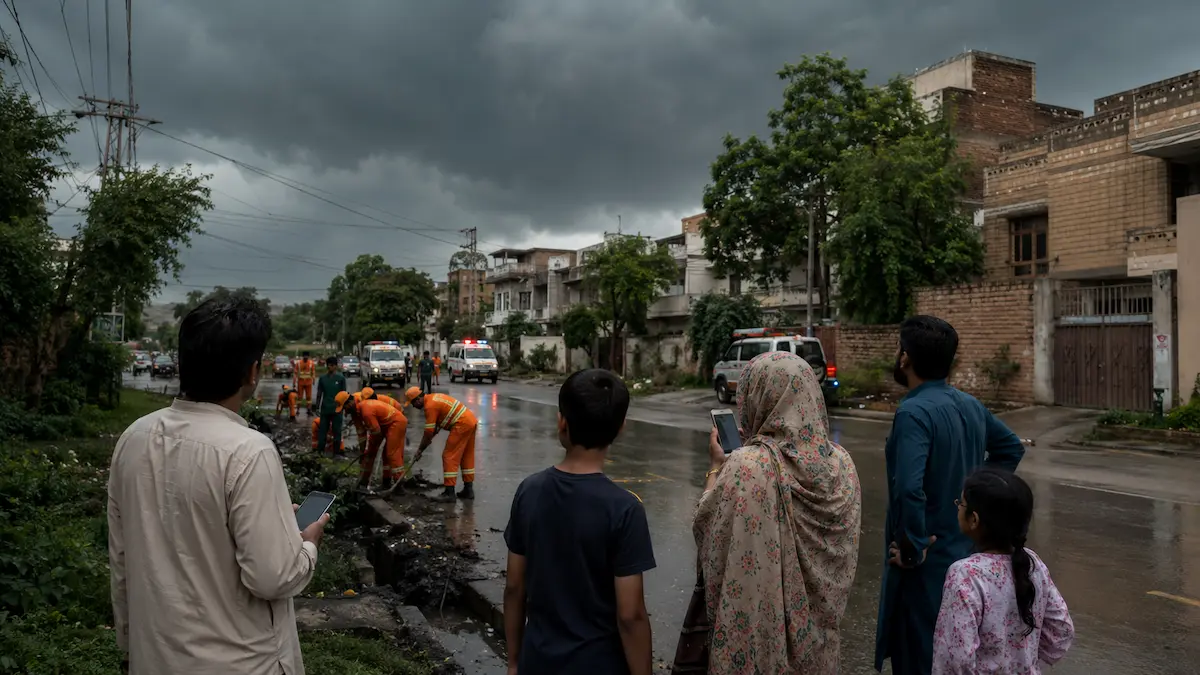
Rivers are not the only danger this monsoon. Officials say blocked drains, weak sewer systems, and fast runoff can flood city streets even when river levels stay safe.
This pattern has repeated in past monsoon seasons. Roads, homes, and shops flood within minutes after heavy rain, long before any river crosses a danger mark.
For readers tracking wider weather patterns this season, our earlier pre-monsoon rain update explains how this year’s heat and early rain set the stage for the current alert.
Rs7.17 Billion Allocated for Flood Preparedness
According to official government announcements, Punjab has set aside Rs7.17 billion for disaster management warehouses and preparedness work. The funds cover the Irrigation Department, WASA, Health Department, Agriculture Department, Livestock Department, and Rescue 1122.
NDMA Flood Warning: Six Cities on Alert
The timing of Punjab’s move matters. According to the National Disaster Management Authority (NDMA), flooding is possible in Lahore, Rawalpindi, Sargodha, Gujranwala, Faisalabad, and the hill torrent areas of DG Khan during July.
NDMA has also cautioned that heavier rainfall could arrive later in the month. That raises the chance of both flash floods and city drainage failures at the same time.
| City or Region | Main Flood Risk |
|---|---|
| Lahore | Urban flooding, drainage overload |
| Rawalpindi | Nullah flooding, low lying areas |
| Sargodha | Heavy rainfall, waterlogging |
| Gujranwala | Urban drainage failure |
| Faisalabad | Heavy rainfall, waterlogging |
| DG Khan (hill torrent areas) | Flash flooding |
Why Implementation Will Matter More Than the Announcement
Disaster management specialists say early warning systems only work well when warnings lead to fast local action. An alert alone does not stop flood damage.
Timely public alerts need to be matched by drain cleaning, emergency staff on the ground, working control rooms, traffic management, and close coordination between district administrations and rescue services.
Past monsoon seasons show a clear pattern. When drainage channels are cleared late or warnings reach residents slowly, homes, vehicles, businesses, and farmland take more damage. Disrupted routines during flooding season can also affect everyday plans for families, including school related dates such as the Punjab Matric result 2026 schedule in badly hit districts.
A Wider Test for Punjab’s Disaster Management System
This monsoon season could become an important test of Punjab’s evolving disaster strategy. Authorities are trying to connect weather forecasting, emergency warehouses, Rescue 1122 operations, district administrations, and urban drainage management into one working system.
If these parts work together, flood prone districts including Potohar and southern Punjab could get earlier warnings and faster emergency help. Better coordination could also reduce disruption from urban flooding, which has grown more common as rainfall patterns across Pakistan become less predictable.
Frequently Asked Questions
What is Punjab’s monsoon early warning system?
It is a preparedness setup that links weather forecasting with emergency response. It is meant to alert departments and residents about heavy rain, flash floods, and urban flooding before damage happens.
Which cities has NDMA warned about possible flooding?
NDMA has warned of possible flooding in Lahore, Rawalpindi, Sargodha, Gujranwala, Faisalabad, and the hill torrent areas of DG Khan during July.
How much has Punjab allocated for monsoon preparedness?
Official government announcements state that Punjab has allocated Rs7.17 billion for disaster management warehouses and preparedness measures across several departments.
Why is urban flooding a major concern this monsoon season?
Officials say blocked drains, overloaded sewer systems, and fast runoff can trigger flooding emergencies in cities even when river levels stay below danger marks.
Which departments are involved in Punjab’s flood response plan?
The plan involves the Irrigation Department, WASA, Health Department, Agriculture Department, Livestock Department, and Rescue 1122.
Will early warnings actually reduce flood damage in Punjab?
Experts say warnings only help if they are followed by fast local action, such as drain cleaning, staff deployment, and clear communication with residents before flooding starts.