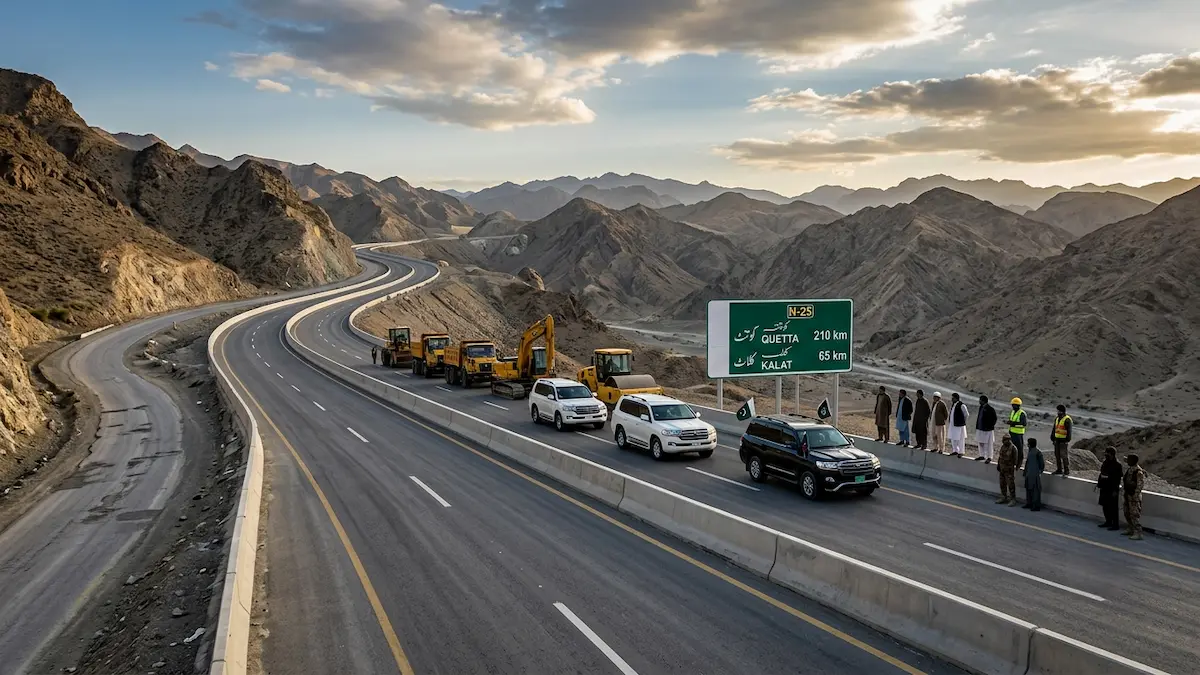
Karachi Chaman Highway Rebuild: What Is Changing
The National Highway N-25 links Karachi with Quetta and then Chaman, a key border point with Afghanistan. It is one of Pakistan’s busiest routes for passengers and cargo.
The federal government has now announced a full rebuild of this corridor. The existing road will become a modern four lane dual carriageway, according to official statements.
Unlike routine repairs, this project rebuilds major sections of the highway. It also adds bypasses around towns and improves engineering standards across nearly 800 kilometres.
Why the N-25 Earned the Name Killer Road
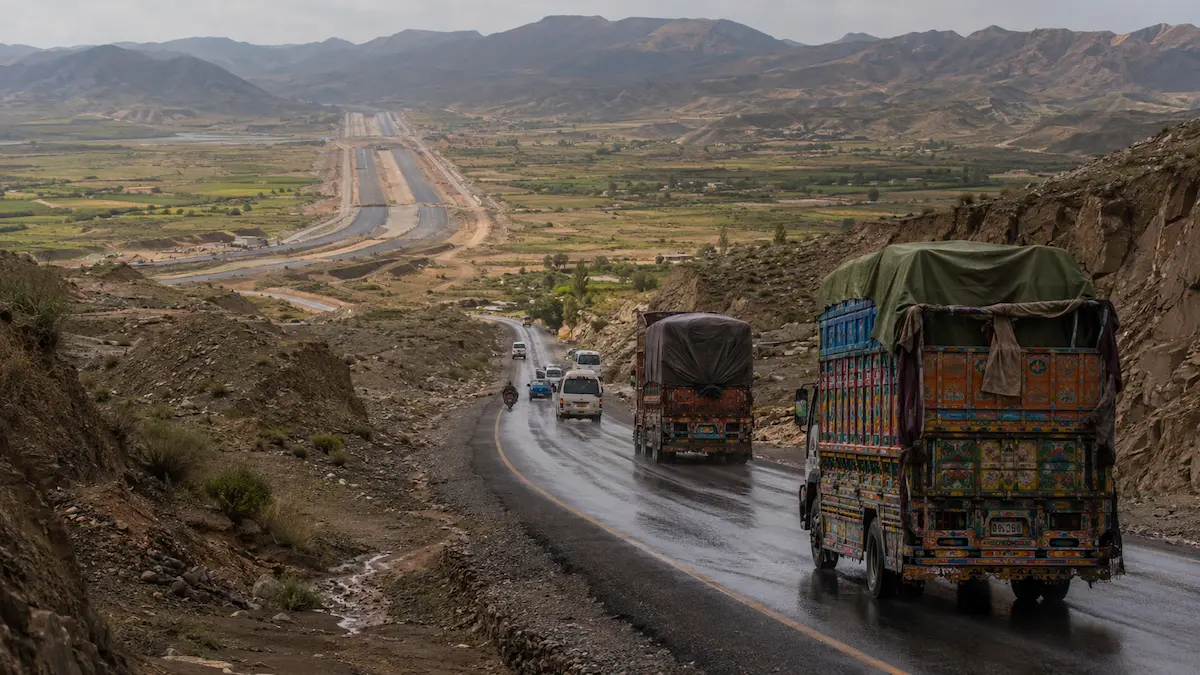
The Karachi to Chaman route has a difficult history. Buses, trucks, oil tankers, and private cars share narrow lanes every day.
Much of the highway still runs on just two lanes. Heavy vehicles often overtake in risky spots, which raises the chance of accidents.
Balochistan’s terrain adds to the problem. Mountain roads, sharp turns, and long gaps between towns demand stronger engineering and better traffic control.
Old road surfaces, weak shoulders, and missing safety barriers have made things worse. Because of this long record of accidents, people often call the N-25 the killer road.
Rs300 Billion Plan: What the Government Announced
Prime Minister Shehbaz Sharif confirmed the N-25 will be rebuilt as a four lane dual carriageway with modern engineering standards. As per government announcements, the plan includes new bypasses, better road alignment, improved signage, and updated safety systems throughout the corridor.
Officials expect construction to take about one and a half to two years, depending on funding and progress on the ground. The National Highway Authority will oversee execution of the project.
How the New Road Could Change Trade and Daily Life
Karachi handles a large share of Pakistan’s sea trade, while Chaman remains a major crossing point for goods moving to and from Afghanistan. A faster, safer N-25 could ease pressure on this trade corridor.
Smoother roads may lower vehicle maintenance costs for transport companies over time. Farmers moving produce, importers, and exporters could also benefit from more predictable delivery times.
This effort follows a pattern seen in other parts of the country. Pakistan’s M13 and M12 motorway project and the Rawalpindi Ring Road project show a wider push toward upgrading national road infrastructure.
Better logistics also matter for Pakistan’s wider economy, including sectors like the auto industry recovery, which depends on efficient road transport to move vehicles and parts across the country.
Financing the Project
One of the most discussed parts of this announcement is how the government plans to pay for it. The Prime Minister said the project will use savings created by lower international oil prices, instead of passing that full benefit to consumers through cheaper fuel.
Officials describe this approach as turning temporary financial relief into a lasting national asset. Whether this model works will depend on steady funding and careful project management.
The Solar Tube Well Project in Balochistan
Alongside the highway announcement, the Prime Minister also revealed a second major initiative. Around 27,000 agricultural tube wells across Balochistan are being converted to solar power under a Rs75 billion programme.
According to official sources, the federal government will contribute around Rs50 billion, with the province covering the rest. The goal is to cut electricity subsidy costs and improve energy access for farmers.
Karachi Chaman Highway Rebuild at a Glance
| Feature | Current Situation | Planned Upgrade |
|---|---|---|
| Road Type | Mostly two lanes | Four lane dual carriageway |
| Length | Nearly 800 km | Full corridor upgrade |
| Travel Time | Around 18 hours | Target of 6 to 8 hours |
| Safety | Limited modern features | New signage and alignment |
| Estimated Cost | Not applicable | Around Rs300 billion |
Timeline and What Comes Next
The project will move into implementation once contracts and construction schedules are finalized. Key steps ahead include final engineering surveys, award of construction contracts, and groundbreaking on priority sections.
Progress reports from the government and the National Highway Authority will show whether the project stays on schedule over the next one and a half to two years.
Frequently Asked Questions
What is the Karachi-Chaman highway rebuild?
It is a federal project to rebuild the nearly 800 kilometre N-25 highway into a four lane dual carriageway with better safety features, bypasses, and improved road alignment.
How much will the Karachi-Chaman highway project cost?
The government has announced an estimated cost of around Rs300 billion for the full rebuild of the N-25 corridor.
Why is the N-25 called the killer road?
The route has recorded a high number of serious accidents over the years due to narrow lanes, mountainous terrain, and aging infrastructure.
How much travel time will the new highway save?
According to the Prime Minister, travel time between Karachi and Chaman could fall from around 18 hours to about 6 to 8 hours once the project is complete.
How is the government financing the project?
Officials say the project will be funded using savings created by lower international oil prices instead of passing that full benefit on through fuel prices.
What is the solar tube well programme announced alongside the highway?
Around 27,000 agricultural tube wells in Balochistan are being converted to solar power under a Rs75 billion programme, with the federal government contributing about Rs50 billion.