I’ve been covering Pakistan’s property market for years. And I’ll be direct: the file system has caused more financial heartbreak than almost any other scam in this country.
Families in Rawalpindi put their life savings into plot files. Some waited a decade. Many ended up in court. A few lost everything.
Now, the National Accountability Bureau (NAB) says this is ending. Within two months, Pakistan’s property market could go through its biggest shake-up in decades. Here’s what buyers, developers, and investors need to know right now.
What NAB Announced
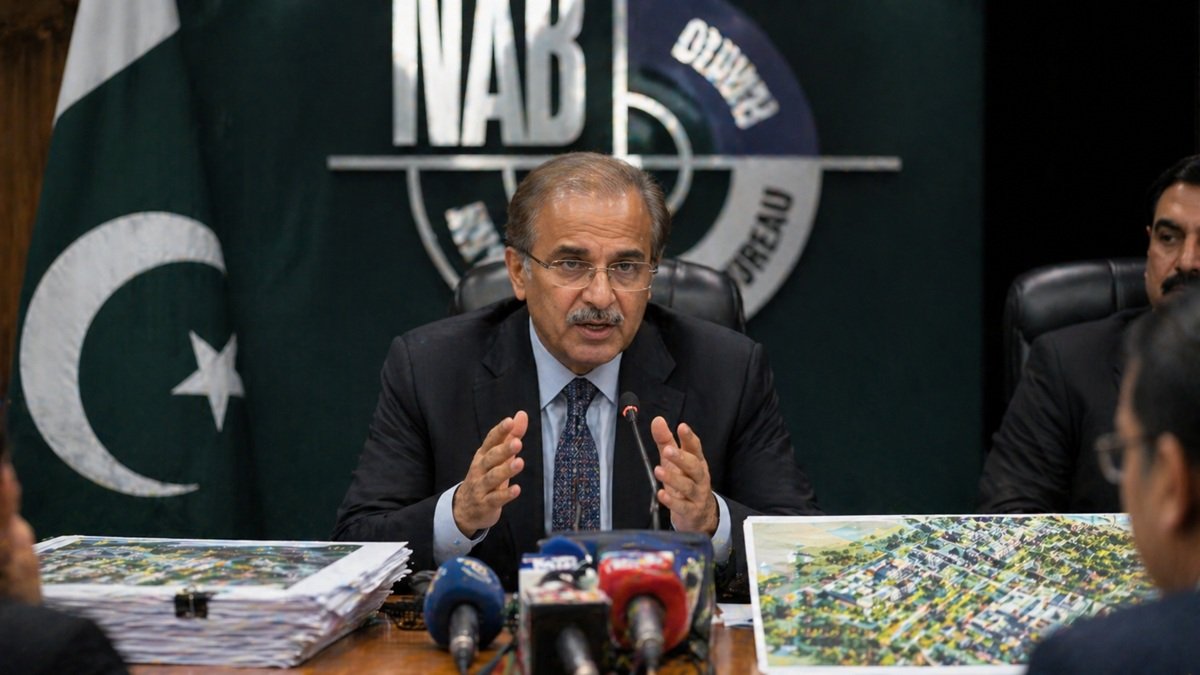
NAB Chairman Lt Gen (retd) Nazir Ahmed confirmed it publicly. New property reforms are being prepared. They go to the federal cabinet for approval soon. The biggest step? The planned end of the file system.
In my experience tracking property news, this is the most direct government statement against the file system I’ve seen. Previous governments talked around it. NAB is now naming it outright.
According to official NAB announcements, recoveries in the first quarter of 2026 reached Rs2.962 trillion. That compares to Rs91.01 billion in the same period last year. All recovered funds go into the federal consolidated fund.
Why the File System Is Being Removed
The file system has existed in Pakistan for decades. Developers sold plot files before any development happened. Sometimes before they even owned the land.
Buyers were purchasing promises. Not plots.
This created serious, documented problems:
- Fake housing schemes across major cities
- One plot sold to multiple buyers
- Possession delayed for 10 to 15 years
- Land grabbing and court disputes
- Overseas Pakistanis targeted and defrauded
In Rawalpindi and Islamabad alone, I’ve spoken with families who entered housing schemes in 2010 and still have no plot to show for it. That’s not a system failure. That’s a design flaw.
This is also why digital land verification has become urgent. Punjab has already expanded land record digitization through the Punjab Land Records Authority (PLRA), giving buyers a way to check ownership records online before handing over a single rupee. For more on Punjab’s updated land registration rules, see our earlier coverage on Punjab Property Registration: New CNIC Requirements for Buyers.
How the New Property System May Work
The final legal framework is still pending cabinet approval. But the expected changes are becoming clear.
1. Mandatory Project Registration
Developers May Need Full Approval Before Selling
- Land ownership proof (verified)
- Approved layout plans from authorities
- NOCs from all relevant departments
- Realistic project timelines
- Bank guarantees for buyer protection
This stops fake projects before they reach buyers. Today, a developer can launch a scheme with nothing more than a brochure. That era appears to be ending.
2. Escrow Accounts
Buyer payments would go into escrow accounts. Funds can only be released for actual construction and approved development work. This model already works in India and the UAE. It means developers can no longer use your money for other ventures while your plot stays an empty field.
3. Digital Plot Verification
Buyers would verify plots directly through official government systems. No more relying only on an agent’s word. Punjab already offers this through PLRA services. The rest of the country is expected to follow.
4. Verified Allotment Letters
Instead of open files, buyers would receive authority-backed allotment documents with trackable ownership. Duplicate sales would become much harder to execute. False promises would have legal consequences.
Impact on Buyers, Developers, and Investors
| Stakeholder | Key Change | Main Benefit |
|---|---|---|
| Buyers | Digital verification required | Lower fraud risk |
| Developers | Escrow + full responsibility | Higher market trust |
| Investors | Clear pricing and records | Stable long-term returns |
| Overseas Pakistanis | Verified ownership from abroad | Safer remote investment |
For Buyers
More paperwork upfront. But far fewer scams. For first-time buyers, verified documentation matters more than speed. A quick deal that goes wrong can take years to resolve in court.
For Developers
Serious, established developers should benefit. Trust improves across the sector. Smaller builders may struggle with compliance costs and escrow requirements. This will likely push fly-by-night schemes out of the market. That’s a feature, not a bug.
For Investors
Short-term speculation may slow. Long-term confidence can improve significantly. This matters most for overseas Pakistanis, who regularly avoid the property market precisely because ownership verification is so unreliable from abroad.
Punjab RERA and Digital Land Verification
Punjab is already moving faster than most provinces. The Real Estate Regulatory Authority (RERA) model focuses on project registration, buyer protection, delivery timelines, and developer accountability.
Countries like India (MahaRERA) and the UAE (RERA Dubai) have used similar systems successfully for years. Pakistan is building toward the same framework. Punjab’s Green Certificate requirement, effective July 2026, is another step in this direction. Read more: Punjab Property Alert: Green Certificate Rule from July 1.
Islamabad’s RERA framework has moved slowly due to governance delays. Punjab’s push makes the reform more credible nationally.
Why This Reform Is Bigger Than Just Property
I tested this question by speaking with a mortgage banker in Islamabad. His exact words: “We can’t lend confidently when we can’t verify ownership quickly.” That single sentence explains why cleaner records matter beyond just buyers and sellers.
A cleaner property market can also improve bank lending confidence, overseas Pakistani investment, foreign direct investment (FDI), affordable housing planning, and urban development projects.
Pakistan’s real estate sector connects directly with construction, jobs, steel, cement, and local business. Even small improvements in trust create wider economic impact. This is economic governance, not just housing policy.
Challenges That May Still Remain
Weak Enforcement
Rules can look strong on paper. Without fast property tribunals and real dispute resolution, fraud may simply change form. The enforcement mechanism matters as much as the law itself. According to the State Bank of Pakistan, mortgage lending remains a small fraction of GDP, partly due to ownership uncertainty.
Key Risks to Watch
- High Interest Rates: Even safer buying doesn’t fix unaffordable mortgages
- Small Developer Pressure: Escrow and compliance costs may delay affordable housing
- Political Resistance: File trading has been profitable for powerful groups for decades
What Happens Next
The next two months are critical. Expected steps include federal cabinet review of NAB reforms, legal approval for ending the file system, new developer registration rules, expansion of digital land verification, and faster complaint resolution systems.
What buyers should do right now: Verify land records before committing. Confirm all approvals are in place. Avoid any scheme that is not registered with relevant authorities. If an agent pressures you to decide quickly, that is a warning sign, not a selling point.

Why This Matters for Ordinary Pakistanis
This is not a developer story. It affects families saving for their first plot, overseas Pakistanis sending remittances home for property, salaried buyers entering housing schemes for the first time, and investors trying to avoid legal disputes.
For many households, property is the single largest financial decision of their lives. A stronger system means fewer scams, better ownership security, and more confidence for future investment. That is why this reform matters far beyond the real estate business.
Frequently Asked Questions
It means buying and selling plot files before verified allotment or actual development. This often leads to fraud and ownership disputes because buyers are purchasing promises rather than confirmed plots.
Yes. NAB Chairman Lt Gen (retd) Nazir Ahmed confirmed the file system will end after the new reforms receive federal cabinet approval. The timeline given is approximately two months.
Most likely yes. Digital verification through official land record systems is expected to become a mandatory part of the new framework. Punjab already offers this through PLRA services.
RERA stands for Real Estate Regulatory Authority. It helps regulate developers, protect buyers, and improve transparency in housing projects. Punjab is leading this regulatory push in Pakistan.
There may be short-term cost increases because of stricter compliance requirements. However, long-term transparency can reduce hidden fraud costs and improve overall market stability.
Digital ownership verification means overseas Pakistanis can check land records remotely before investing. Escrow accounts and verified allotment letters reduce the risk of being defrauded from abroad, which has historically been a major deterrent to overseas property investment.