Lahore Grocery Prices June 2026: Official Rates vs What You Actually Pay
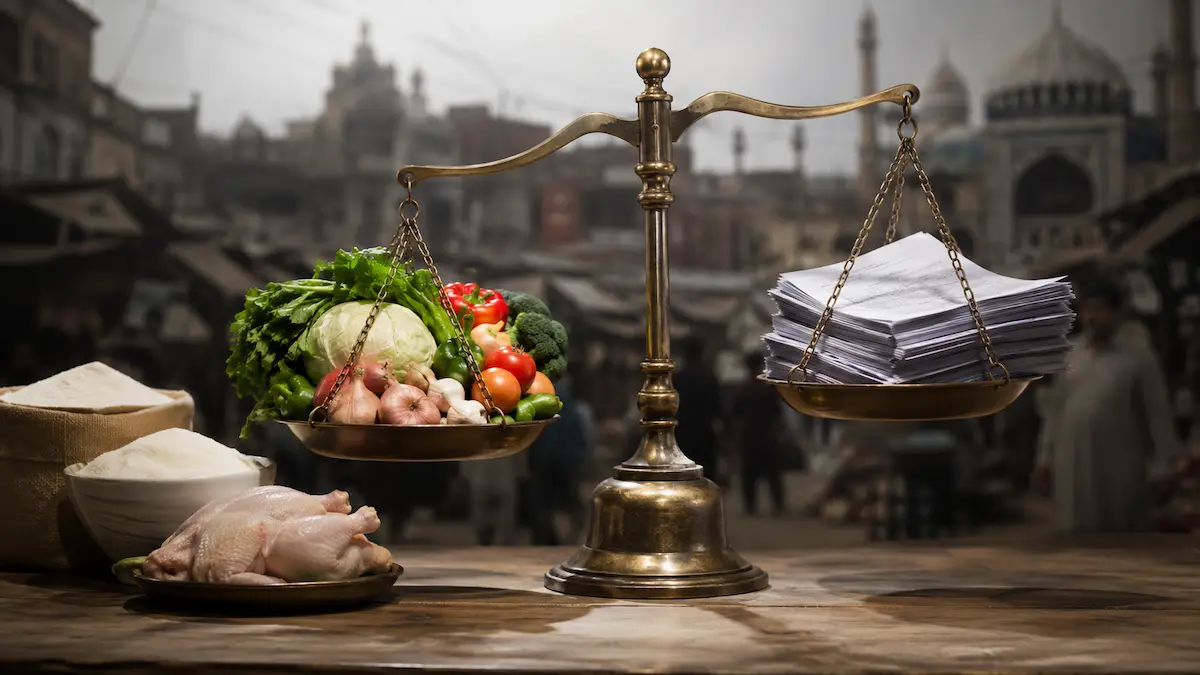
Punjab authorities regularly publish official rates for essential food items. These rates are meant to act as benchmarks. But in practice, most Lahore shoppers pay considerably more at local markets, kiryana stores, and vegetable carts.
The gap is not new. What makes June 2026 worth examining is that it follows months of easing inflation, yet household grocery bills have not reflected that relief for many families.
The Price Gap at a Glance
The table below shows official government rates alongside typical market prices currently seen across Lahore. The difference is sharpest in fresh vegetables, poultry, and imported kitchen spices.
| Item | Official Rate | Market Price Range |
|---|---|---|
| Chicken Meat | Rs 595/kg | Rs 630–700/kg |
| Tomatoes | Rs 85–90/kg | Rs 140–200/kg |
| Onions | Rs 50–55/kg | Rs 80–100/kg |
| Potatoes | Rs 20–22/kg | Rs 30–40/kg |
| Garlic | Rs 157–165/kg | Rs 250–280/kg |
| Ginger | Rs 280–290/kg | Rs 400–450/kg |
| Sugar | Rs 144/kg wholesale | Rs 165–170/kg retail |
| Bananas | Rs 135–150/dozen | Rs 150–250/dozen |
| Roti | Rs 15–16 | Around Rs 20 |
Prices may vary by location, quality, and daily market conditions. Staple items like flour and rice tend to show smaller gaps, while fresh produce and poultry show the widest differences.
Why Market Prices Stay Above Official Rates
Understanding this gap requires looking at how food actually moves from farms and wholesale markets to your local store or cart. Official rates are set at a fixed point in time. But by the time an item travels from a wholesale mandi to a retail seller, several cost layers have already been added.
These include transportation fuel costs, storage and handling, spoilage losses, and the retailer’s own operating expenses. No official rate can absorb all of these automatically.
According to the Ministry of National Food Security and Research, food prices in Pakistan are closely linked to agricultural production cycles, supply chain conditions, and market arrivals. When any of these variables shifts, retail prices respond before official benchmarks are updated.
This is why tomatoes officially listed at Rs 85 per kg may sell at Rs 200 per kg when supply from farming regions drops during a dry spell or road disruption.
Items Consumers Are Watching Most Closely
Chicken
Chicken is a primary protein source for millions of Lahore households. Even a Rs 50 to 100 per kg increase directly adds to weekly spending for most families. The official rate of Rs 595 per kg is frequently exceeded, with some areas reporting Rs 680 to 700 per kg at retail.
Poultry prices are particularly sensitive to feed costs and production conditions, which can shift quickly without advance warning to consumers.
Tomatoes and Onions
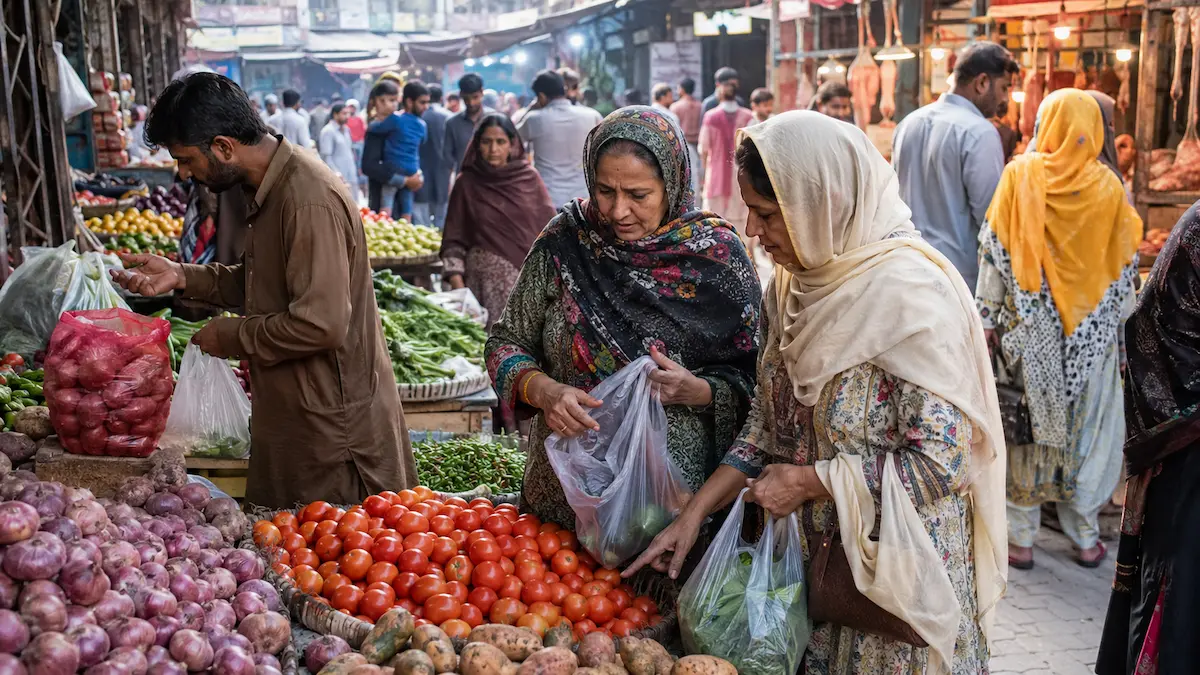
These two items are indicators of broader vegetable market pressure. Both experience sharp seasonal swings. When supply from agricultural regions decreases even slightly, retail prices can double within a few days.
The current tomato price range of Rs 140 to 200 per kg, against an official rate of Rs 85 to 90, represents one of the widest gaps in the market this month.
Garlic and Ginger
These kitchen essentials have consistently been among the most expensive items relative to their official rates. Both are sensitive to import availability and supply shortages. Garlic at Rs 250 to 280 per kg versus an official Rs 157 to 165 reflects a sustained supply issue rather than a temporary spike.
For households that cook daily Pakistani food, garlic and ginger are not optional. Their elevated prices quietly add hundreds of rupees to the monthly grocery bill without being highly visible line items.
Sugar
Sugar moves from a wholesale rate of Rs 144 per kg to Rs 165 to 170 at retail. The markup is partly structural. Packaging, distribution margins, and retailer costs account for the difference. However, any supply disruption or pre-budget uncertainty can push retail prices further above wholesale levels.
What Is Driving Food Prices in Lahore Right Now
Supply Chain Costs
Higher transportation and fuel costs continue adding to retail prices before goods reach consumers. This cost is passed along at every point in the chain, from the farm to the wholesale market to the corner store.
Seasonal Demand
Demand typically rises before major religious events and holidays. June 2026 falls in a period that could be affected by pre-monsoon seasonal shifts as well as any upcoming calendar events that drive bulk household purchasing.
Agricultural Output
Lower crop arrivals, whether from poor yields, weather events, or transportation delays, directly reduce supply in wholesale markets. Retailers respond by raising prices to manage limited stock. Vegetables are the most visible example of this pattern in June 2026.
Federal Budget Measures
Pakistan’s federal budget period creates additional market uncertainty. Taxation changes and economic policy shifts can indirectly affect supply chains and food costs. As budget-related discussions continue, some market participants adjust prices preemptively in response to anticipated policy changes.
Pakistan’s ongoing fiscal decisions, including those covered in the delayed Budget 2026 discussions around IMF conditions, tax changes, and energy prices, are adding background pressure that filters through to grocery costs.
For a closer look at how Budget 2026-27 salary tax and fuel measures will affect household spending power, the picture becomes even clearer: disposable income pressure and food price pressure are hitting simultaneously.
The Real Question: What Does a Family Actually Spend?
A single item’s price increase does not fully capture what households experience. What matters is the total monthly grocery bill, which aggregates dozens of small increases across every category.
| Household Type | Estimated Monthly Grocery Budget |
|---|---|
| Basic Essentials | Rs 35,000–40,000 |
| Moderate Consumption | Rs 50,000–60,000 |
| Higher Consumption | Rs 75,000+ |
These estimates can shift depending on how much meat a household consumes, whether branded products are preferred over loose alternatives, and what seasonal items are being purchased that month.
Inflation statistics from the Pakistan Bureau of Statistics may show a cooling trend. But most households do not feel that cooling in their weekly shopping trips. The experience of inflation is specific and immediate: it is the price of chicken on Wednesday, the cost of a dozen tomatoes on Saturday.
Where to Check Official Price Lists
Consumers do not need to rely solely on market information. Punjab government channels publish official price lists that can be used as a reference when shopping or raising complaints about overcharging.
Useful resources include the Punjab Government Portal, Pakistan Bureau of Statistics, the Government of Pakistan Portal, and local district administration announcements. District administrations also conduct periodic price monitoring in wholesale and retail markets.
It is worth noting that awareness of official rates can itself be a consumer protection tool. Shopkeepers are less likely to charge significantly above official rates when customers are informed.
The Budget 2026 income tax cuts and salary and pension freeze decisions also directly affect how much financial room households have to absorb higher grocery costs.
What to Watch in the Coming Weeks
Several developments could move Lahore grocery prices during the remainder of June 2026.
Poultry Prices
Chicken prices have shown recent fluctuations linked to feed cost changes and production cycles. Continued monitoring of wholesale poultry arrivals will indicate whether retail prices will rise further or stabilize.
Vegetable Arrivals
Fresh arrivals from agricultural regions remain the most direct driver of tomato, onion, and potato prices. Any improvement in supply from major producing areas will be felt at retail level quickly.
Monsoon Conditions
Pakistan’s monsoon season affects transportation routes and crop conditions. Early or heavy monsoon activity can disrupt vegetable supply from farming regions, potentially keeping prices elevated through the summer months.
Policy Developments
Post-budget policy implementation will determine whether any measures ease supply chain costs or affect the price of imported kitchen items like garlic and ginger. Consumers and retailers will both be watching closely.
Frequently Asked Questions
Why are Lahore market prices higher than official rates?
Market prices are influenced by wholesale costs, transportation expenses, supply conditions, and retailer operating costs, which may differ from official benchmark rates. Official rates are set periodically and cannot instantly reflect daily cost changes across the supply chain.
Which grocery items have the largest price differences in June 2026?
Fresh vegetables, poultry products, garlic, and ginger show the biggest gaps. Tomatoes are selling at up to Rs 200 per kg against an official Rs 85 to 90. Garlic is nearly double the official rate in many market areas.
Where can consumers check official grocery rates?
The Punjab Government Portal, Pakistan Bureau of Statistics, and local district administration notices publish official price lists. These are updated regularly and can be used as a reference benchmark.
How much should a Lahore household budget for groceries in June 2026?
Based on current market rates, a household covering basic essentials should budget Rs 35,000 to 40,000 per month. Moderate consumption households are spending Rs 50,000 to 60,000, and higher consumption households may spend Rs 75,000 or more.
Are grocery prices lower than last year?
Inflation has moderated compared to the peak years of 2023 and 2024, but many households continue to pay more in absolute terms than they did in 2025 because several food categories remain elevated in price.
What should consumers monitor in the coming weeks?
Poultry price movements, vegetable supply arrivals, early monsoon weather conditions, and the implementation of federal budget measures are the most likely factors to affect Lahore grocery prices in the near term.