
Pakistan Names Young Squad for Asian Games 2026
Pakistan have announced a 15-member squad for the 2026 Asian Games that reads like a snapshot of the country’s emerging cricket future. Sahibzada Farhan will lead the team as captain, while Abdul Samad takes the vice-captain role. The selection includes four cricketers who have never played a T20 International match before.
This is not a squad built on big names alone. The Pakistan Cricket Board has chosen players who have performed well in domestic cricket and shown they can handle aggressive cricket at the highest level. The coaching staff mirrors this approach, bringing together experienced international coaches with a clear mission to develop young talent.
Why This Squad Matters for Pakistan’s Future
The real story here is not who made the squad. It is what the selection says about how Pakistan wants to build its T20 team going forward. For several years, Pakistan has changed combinations too often in white-ball cricket. Selectors faced criticism for relying on a small group of proven players rather than developing fresh talent.
This squad suggests a different approach. The PCB appears to be trying to build a larger talent pool that gives more players a chance to prove themselves. This matters because it signals confidence in domestic cricket as a pathway to international opportunities. Several players earned their place through strong performances in Pakistan’s domestic competitions, not just reputation.
The Squad: A Mix of Experience and Youth
The 15-member squad includes Sahibzada Farhan, Abdul Samad, Abrar Ahmed, Ahmed Daniyal, Akif Javed, Ali Raza, Arafat Minhas, Haider Ali, Hasan Nawaz, Maaz Sadaqat, Mohammad Salman Mirza, Saad Masood, Saim Ayub, Sufyan Moqim, and Usman Khan. The group combines aggressive batters, young all-rounders, and developing bowlers.
Head coach Mike Hesson will work alongside bowling coach Ashley Noffke and fielding coach Shane McDermott. This experienced coaching group brings international cricket knowledge from New Zealand, Australia, and franchise cricket. That balance is important. Young players often perform best when they have experienced coaches guiding them through pressure situations in international tournaments.
Five Players Who Could Define Pakistan’s T20 Future
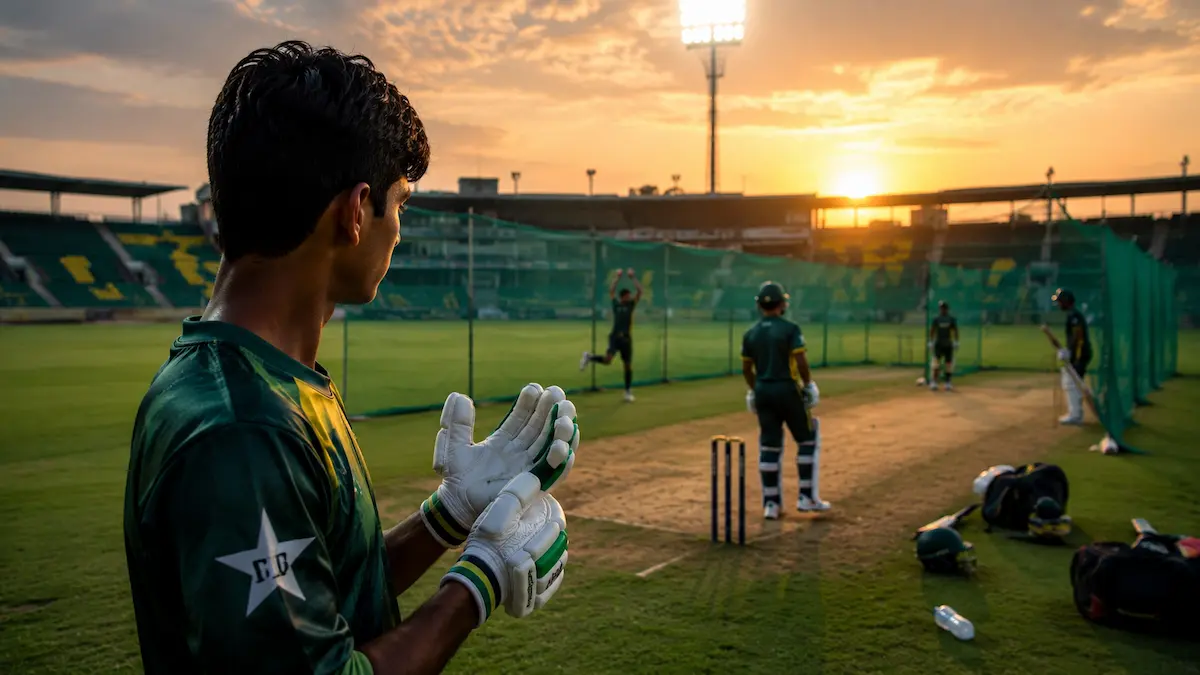
Sahibzada Farhan (Captain)
The newly appointed captain has consistently delivered in domestic cricket. His leadership at the Asian Games could strengthen his case for a larger role in Pakistan’s white-ball plans beyond this tournament.
Saim Ayub
Already one of Pakistan’s most exciting attacking batters, Ayub has the ability to change matches quickly at the top of the order. The Asian Games will give him a chance to show his skill against quality opposition.
Abrar Ahmed
Abrar brings international experience and remains one of Pakistan’s most effective spin options in limited-overs cricket. His experience will be valuable for the younger squad members.
Arafat Minhas
The young all-rounder offers flexibility in both batting and bowling, two qualities that are highly valued in modern T20 cricket. Teams need players who can fill multiple roles.
Hasan Nawaz
Strong domestic performances have pushed Hasan Nawaz into the spotlight. The Asian Games could be his biggest opportunity yet to stake a claim in Pakistan’s future T20 plans.
What Makes This Selection Different
Pakistan have previously used the Asian Games to give opportunities to younger players. However, this squad stands out for three clear reasons.
First, there is a greater focus on domestic form. Several selections reward recent performances in Pakistan’s domestic competitions rather than reputation alone. Second, the squad contains more specialist T20 players known for aggressive batting and wicket-taking ability. Third, the presence of experienced coaches suggests player development is a major objective, not just winning matches.
This approach aligns with how other top cricket nations manage their talent development. Teams like India, England, and Australia regularly introduce new players through secondary tournaments before major ICC events. Pakistan appear to be following a similar model with this Asian Games squad.
The Challenges Pakistan Must Face
While the squad has clear talent, several questions remain unanswered. Death bowling, or finishing innings effectively, remains one of the most difficult skills in T20 cricket. Pakistan will need to ensure their bowlers can handle the final overs of matches.
Fielding consistency is equally important. Modern T20 matches are often decided by catches, run-outs, and boundary saves. Several players in this squad will be experiencing major international tournaments for the first time. How they respond under pressure could shape future selection decisions for Pakistan’s white-ball cricket program.
How This Fits Pakistan’s Bigger T20 Plan
The Asian Games provide a lower-risk environment to evaluate players against international opposition. At the same time, selectors can identify future options for bilateral series and major global tournaments like the T20 World Cup. This approach may help Pakistan improve squad depth, which has become increasingly important in today’s crowded cricket calendar.
You can follow Pakistan’s cricket journey and the Asian Games through the official Aichi-Nagoya 2026 Asian Games website for tournament updates and official schedules. For more information on Pakistan’s broader cricket strategy, check the Pakistan Cricket Board website.
For readers interested in Pakistan’s overall Asian Games preparation, the Pakistan’s road to Japan cricket team announcement provides important context on how this squad selection fits into the country’s wider sporting plans.
What Happens Next
Pakistan will continue preparations before traveling to Japan for the Asian Games. The tournament will give selectors valuable information about which players are ready for bigger international opportunities. Strong performances could help several squad members move closer to Pakistan’s senior T20 setup.
Equally important, the event will help management assess combinations that may be useful in future ICC tournaments. The team will train together, adapt to Japanese conditions, and prepare for matches against some of Asia’s strongest cricket teams. Success in Japan could open doors for several young players who have worked hard in domestic cricket.
Pakistan’s recent focus on young talent in T20 cricket also connects to broader discussions about the Pakistan pace attack and how fast bowling talent is developed at the international level.
Frequently Asked Questions
Who is captaining Pakistan at the 2026 Asian Games?
Sahibzada Farhan has been appointed captain of the 15-member squad for the Asian Games 2026. Abdul Samad serves as vice-captain.
Why has Pakistan selected a young squad for the Asian Games?
The selection reflects the PCB’s focus on developing future T20 talent and expanding the national player pool. The board wants to reward strong domestic performances and give emerging players a chance to prove themselves in international conditions.
How many uncapped players are included in the squad?
Four players selected for the squad are yet to make their T20 International debut. This gives them an important opportunity to compete against international opposition at a major tournament.
Who is the head coach for Pakistan at the Asian Games?
Mike Hesson is Pakistan’s head coach. He is supported by bowling coach Ashley Noffke and fielding coach Shane McDermott. The coaching staff brings experience from international cricket and franchise leagues.
Why is the Asian Games important for Pakistan’s T20 cricket?
The tournament gives selectors an opportunity to evaluate emerging players against international opposition while building depth for future T20 competitions. Performances here will help management identify players ready for higher levels of cricket and test new combinations for future tournaments.
What makes this squad different from Pakistan’s previous Asian Games teams?
This squad stands out for its greater focus on domestic form, its selection of specialist T20 players known for aggressive batting, and a stronger development focus with experienced international coaching staff guiding player growth.