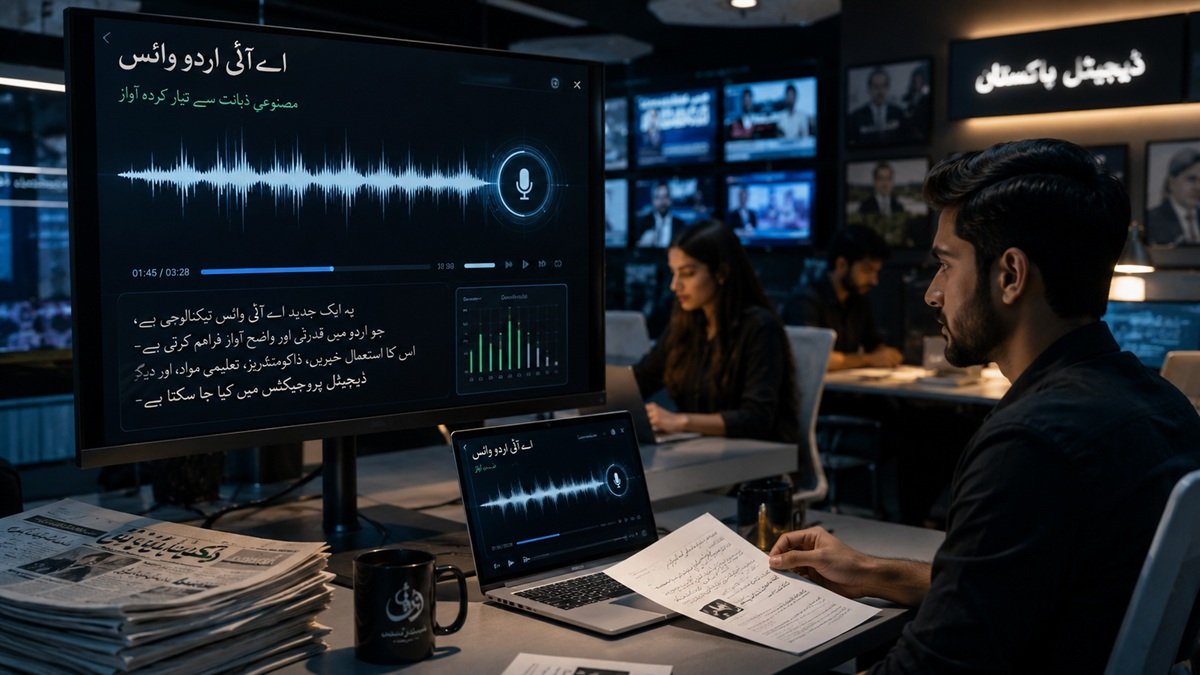
I tested five of the most popular Urdu AI voice generators on real Pakistani news scripts and social video content. The results were surprising. Some tools that look impressive in demo videos fall apart completely when they hit local names, cricket terms, or proper Urdu punctuation. Only a few actually deliver what Pakistani creators need in 2026.
If you produce YouTube explainers, TikTok reels, Facebook news clips, or ecommerce ads in Urdu — this guide is for you. No fluff. Just what works and what does not.
Why Urdu AI Voice Tools Matter in Pakistan
Short-form video is exploding across YouTube Shorts, TikTok, and Instagram Reels. Urdu remains the strongest language for audience engagement in Pakistan. That combination has created a very real problem for small creators.
Hiring a professional voice artist for daily uploads is expensive. Most small pages and news channels simply cannot afford it. AI narration tools now fill that gap — but only when they actually work.
In my experience, the biggest challenge is not finding an AI voice tool. It is finding one that sounds genuinely Pakistani. Generic South Asian accents do not cut it. Neither does a tool that stumbles on names like Babar Azam, Gwadar, or Faisalabad.
Pakistani creators are also producing content for highly specific audiences — political news, PSL commentary, real estate reels, educational explainers. Each of these demands a different kind of narration.
For a broader look at how Pakistani freelancers are using AI tools in 2026, that context is worth reading alongside this guide.
What Makes an Urdu AI Voice Sound Human?
After testing scripts across all five platforms, four things consistently separated the good tools from the bad ones.
Four Things That Actually Matter
- Better Urdu punctuation. Many tools rush through commas and pauses. The narration sounds robotic. Platforms that understand punctuation create smoother, more believable audio.
- Pakistani pronunciation. Generic South Asian accents are not the same as Pakistani Urdu. This becomes obvious in political news, PSL commentary, and regional stories.
- Stable voice tone. Some tools sound fine in short demos but lose consistency during longer narration. For YouTube explainers or documentary content, stability matters a lot.
- Script formatting. This was the most surprising lesson. Better scripts improved voice quality more than any AI setting. Short sentences and clean formatting consistently produced stronger narration.
Script quality matters more than AI settings. Short sentences and proper Urdu punctuation consistently produce better results.
Best Urdu AI Voice Generators in 2026
1. ElevenLabs — Best Overall Urdu AI Voice Quality
ElevenLabs currently delivers the most realistic Urdu narration among major AI voice platforms. I tested it on a three-minute Urdu news explainer and a two-minute documentary-style script. Both sounded smooth. Pauses felt natural. The emotional delivery held throughout.
Its official multilingual voice tools support Urdu speech generation and voice customization. Long-form narration is where it stands out most clearly against competitors.
Why It Stands Out
- Natural pauses and pacing
- Strong emotional delivery
- Cleaner long-form narration
- Better storytelling quality
Weaknesses
- More expensive than most tools
- Some local names still require phonetic spelling
Best For: YouTube documentaries, news explainers, professional narration, high-quality social content.
2. Voiser — Best for Bulk Content Production
Voiser is the most practical tool for creators who upload videos daily. It offers Urdu Pakistan voice support along with pitch and speed control. According to its official language pages, it supports hundreds of voices across multiple dialects.
That flexibility helps social media teams producing large volumes of short clips. I tested it on 30-second Facebook reel scripts and the workflow was noticeably faster than competitors.
Main Advantages
- Large voice library
- Faster workflow
- Better speed control
- Useful for daily uploads
Weaknesses
- Emotional narration feels weaker
- Longer videos may sound synthetic
Best For: Facebook reels, TikTok explainers, daily news pages, ecommerce content.
3. CAMB.AI — Best for Expressive Urdu Narration
CAMB.AI focuses heavily on expressive multilingual speech. During testing, it handled storytelling and sports commentary better than formal political scripts. The conversational tone felt genuinely engaging.
It is becoming popular among creators who want narration that sounds more human and less like a newsroom broadcast.
Strong Features
- Emotional voice delivery
- Regional speech support
- Good conversational tone
- Modern multilingual AI system
Weaknesses
- Interface may feel technical for beginners
- Voice tone changes slightly between clips
Best For: Sports channels, human-interest stories, entertainment explainers, social commentary videos.
4. Voicely — Best for Urdu News Videos
Voicely fits Pakistan’s growing short-news video market surprisingly well. The platform actively encourages shorter sentences, cleaner punctuation, and slower narration speed. That format closely matches how Pakistani digital news pages create social-video explainers.
I tested it on breaking news scripts. The output was clean and broadcast-ready faster than most competitors.
Why It Works
Many creators paste long paragraphs directly into AI tools and get robotic output. Voicely performs better because it pushes creators toward television-style script formatting from the start.
Best For: Breaking news videos, political clips, Facebook news pages, TikTok explainers.
5. LOVO AI — Best for Beginners
LOVO AI offers the simplest workflow for users new to AI narration tools. Its Urdu support is decent for general-purpose content, although realism still trails behind premium competitors.
Main Advantages
- Beginner-friendly interface
- Fast voice generation
- Easy editing tools
- Good for small creators
Weaknesses
- Generic Urdu pacing
- Limited emotional depth
Best For: Educational channels, small YouTube creators, basic marketing videos, beginners testing AI narration.
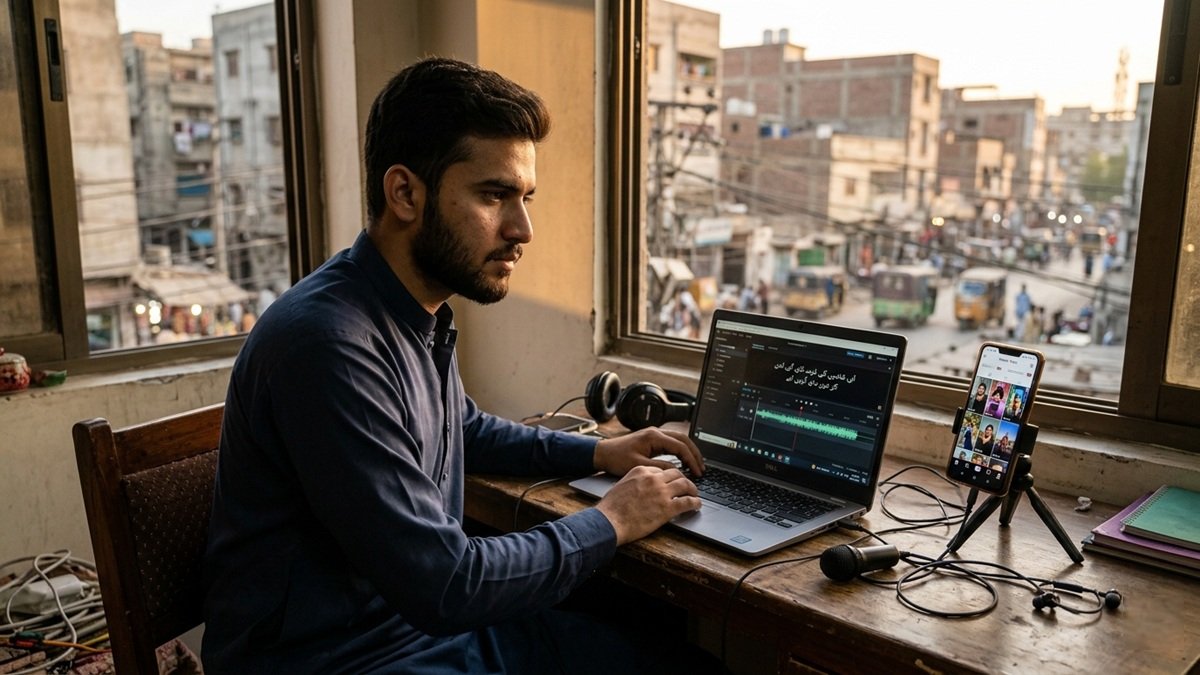
Beginners entering Pakistan’s creator economy are increasingly turning to AI voice tools for fast content production.
Quick Comparison Table
| Tool | Best For | Biggest Strength | Main Limitation |
|---|---|---|---|
| ElevenLabs | Premium narration | Realistic voice quality | Higher cost |
| Voiser | Daily uploads | Workflow flexibility | Less emotional tone |
| CAMB.AI | Storytelling | Expressive narration | Slight voice inconsistency |
| Voicely | News videos | Better script formatting | Less cinematic |
| LOVO AI | Beginners | Simple workflow | Generic Urdu tone |
Which Tool Is Best for Urdu News Videos?
Best for Premium News Explainers: ElevenLabs delivers the strongest emotional narration and cleaner long-form Urdu pacing. Use it when production quality is the priority.
Best for Fast Social News: Voicely works extremely well for quick Urdu bulletins and short breaking-news clips.
Best for Daily Publishing: Voiser fits creators producing multiple videos every day. The workflow speed advantage is real.
Common Mistakes Pakistani Creators Make
The biggest mistake? Focusing too much on voice settings and ignoring script quality. In actual testing, script formatting improved narration more than changing voice models ever did.
These small adjustments consistently improved results across every platform tested:
- Use shorter sentences
- Add commas naturally
- Avoid huge paragraphs
- Break scripts into sections
- Write proper Urdu instead of messy Roman Urdu
Another major mistake is using overly dramatic voices for serious news content. Simpler narration usually sounds more trustworthy to Pakistani audiences.
This connects to a broader shift happening in Pakistan’s education and content sector. Pakistani students are also replacing traditional study methods with AI tools — the same literacy around AI that helps creators also benefits learners.
What Is Changing in Pakistan’s AI Content Market
Pakistan’s creator economy is moving quickly toward AI-assisted production. According to Meta for Creators and the YouTube Creator Academy, short-form video growth is accelerating fastest in mobile-first regions — and Pakistan is clearly one of them.
That growth is increasing demand for:
- Faster Urdu narration
- Mobile-friendly editing
- Automated voiceovers
- Low-cost video production
What Comes Next
The next major trend will likely focus on voice cloning, regional accent control, real-time translation, and AI-powered newsroom systems. For Pakistani creators, the biggest advantage will go to tools that understand local Urdu naturally — not generic language models built for global markets.
Frequently Asked Questions