Your April 2026 electricity bill just got heavier. NEPRA has approved a Rs 1.42 per unit increase and changed how fixed charges are calculated. This time, it hits different. Even if you used less electricity, your bill may still be higher. Here is exactly what happened and what you can do about it.
What Changed in April 2026
Two separate changes landed at the same time. Both affect your bill. Together, they change the rules of how electricity is billed in Pakistan.
1. Fuel Price Adjustment (FCA)
NEPRA approved a Rs 1.42 per unit increase for February 2026 electricity usage. This cost is now added to your April 2026 bill. It applies to all DISCOs across the country and K-Electric in Karachi.
This came just after a Rs 1.63 per unit increase that was already added to March bills. So two consecutive hikes are hitting consumers back to back. You can verify all FCA orders directly on the NEPRA official website.
2. Fixed Charges Based on Sanctioned Load
⚠️ This is the bigger change. Fixed charges no longer depend on how many units you used. They now depend on the kW capacity of your electricity connection. Rates range from roughly Rs 200 to Rs 675 per kW depending on your consumer category.
What this means: you can cut your usage, but you cannot cut your fixed charge. That part of your bill is locked in based on your connection capacity.
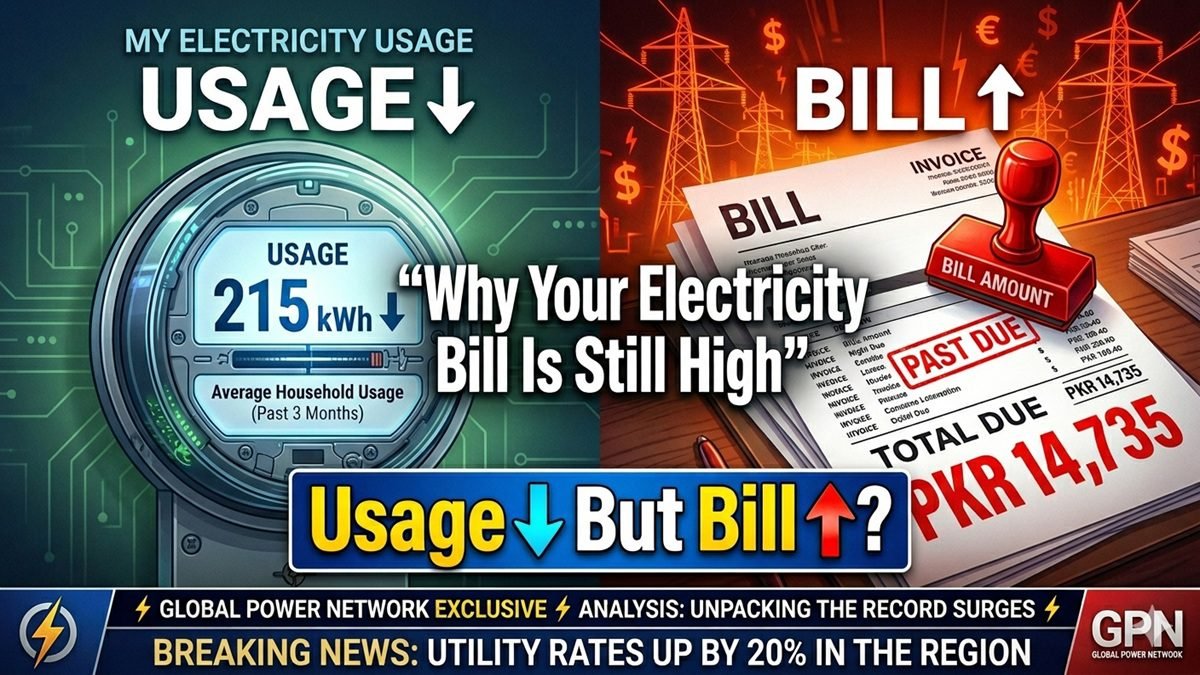
Electricity bills in Pakistan are rising due to new FCA and fixed charge rules — April 2026
Understanding the Rs 1.42 Per Unit Increase
Pakistan’s electricity bills include a monthly Fuel Price Adjustment. This adjusts your bill based on actual fuel costs that month. When global LNG and coal prices rise, so does your bill.
Pakistan depends heavily on imported fuel. The Central Power Purchasing Agency (CPPA) submits monthly fuel data. NEPRA then approves or rejects the adjustment. In February 2026, that figure was Rs 1.42 per unit.
Want to understand how this connects to Pakistan’s broader energy challenges? Read our detailed breakdown: Pakistan Energy Crisis: Fuel, Gas and Power Risks Explained.
New Fixed Charges Explained
This is the part that is genuinely new. And it is the part most consumers have not fully understood yet.
What Is Sanctioned Load?
Sanctioned load is the maximum electricity capacity your connection is approved for. It is measured in kilowatts (kW). Most homes fall into one of these ranges:
- 2 to 3 kW — Small homes, single room or apartment
- 4 to 6 kW — Average Pakistani household
- 8 kW and above — Large homes, multiple ACs and heavy appliances
Old vs New System
| Feature | Old System | New System |
|---|---|---|
| Fixed charges calculated on | Units used | Sanctioned load (kW) |
| Impact of low usage | Lower fixed charges | No change in fixed charges |
| Consumer flexibility | Higher | Lower |
| Who benefits | Low usage households | High usage (better value per kW) |
Full policy details are available through the Ministry of Energy. For more context on how fixed charges evolved, also read our earlier report: How NEPRA’s Fixed Charges Are Changing Pakistan’s Electricity Bills.
Real Example: Why Bills May Rise
Let us look at a typical household in Rawalpindi or Lahore.
| Category | Before (Old System) | After (New System) |
|---|---|---|
| Connection size | 5 kW | 5 kW |
| Monthly usage | Low (careful user) | Same low usage |
| Fixed charges | ~Rs 1,000 | Rs 2,500 to Rs 3,375 |
| Total bill | Moderate | Noticeably higher |
💡 This is the key shift. Saving electricity used to save money directly. That link is now weaker. Even a careful household pays more simply because of how large a connection they have.
Middle-income households feel this change most. Fixed charges now add up regardless of usage.
Who Is Affected and Who Is Protected
Most Affected Groups
- Middle-income households with 4 to 6 kW connections
- Low-usage households that are not classified as lifeline consumers
- Solar net metering users who still pay fixed charges on connection capacity
Protected Groups
- Lifeline consumers — those using up to 100 to 200 units per month depending on the DISCO
- EV charging stations — protected under current policy
- Prepaid meter users — some relief through controlled consumption
Local Impact in Pakistani Cities
Rawalpindi and Islamabad
Most homes here have 4 to 6 kW sanctioned loads. Fixed charges under the new system may double for these households. With summer approaching, the combined impact of higher fixed plus higher variable costs will be felt sharply.
Karachi
K-Electric now follows similar FCA rules. Latest updates and bill breakdowns are available at the K-Electric website. Karachi consumers should expect a similar pattern to DISCO areas.
Lahore
Higher summer usage adds pressure on top of the new fixed charges. Both fixed and variable costs are rising together during the peak cooling season.
Why Electricity Prices Keep Rising
This is not one problem. It is five problems compounding each other.
- Expensive fuel imports: Pakistan buys LNG and coal at global market rates. When prices go up abroad, bills go up here.
- Circular debt: The power sector owes over Rs 2 trillion. Recovering this requires higher tariffs.
- Capacity payments: Pakistan pays power plants whether electricity is used or not. These costs are passed to consumers.
- System losses: Theft and aging infrastructure add cost that honest payers absorb.
- Policy reforms: A shift toward cost-based tariffs under IMF-linked reforms means subsidies are shrinking.
Our earlier report covers this in more detail: How Pakistan’s Mini-Budget and IMF Deal Is Affecting Salaries and Bills. You can also follow updates from the Ministry of Finance.
What You Can Do to Reduce Your Bill
Step 1: Check Your Sanctioned Load
Contact your DISCO and ask what your sanctioned load is. If your actual usage is consistently low, you may qualify for a reduction. A lower kW rating means lower fixed charges every single month.
Step 2: Shift Usage to Off-Peak Hours
Run heavy appliances like washing machines, irons, and water heaters during off-peak times. This reduces your per-unit cost without affecting fixed charges.
Step 3: Upgrade to Energy-Efficient Appliances
Inverter ACs, LED lighting, and 5-star rated appliances use significantly fewer units. This reduces the variable part of your bill even when fixed charges stay the same.
Step 4: Plan Solar Carefully
Solar can still reduce your unit consumption and net metering credit. But fixed charges based on sanctioned load still apply. A smaller connection may be worth discussing with your installer.
Step 5: Stay Informed
FCA changes every month. Bookmark the NEPRA website and check for monthly updates before your bill arrives.
Key Takeaways
FAQs