HEC Digital Degree Attestation: What Changed in Pakistan
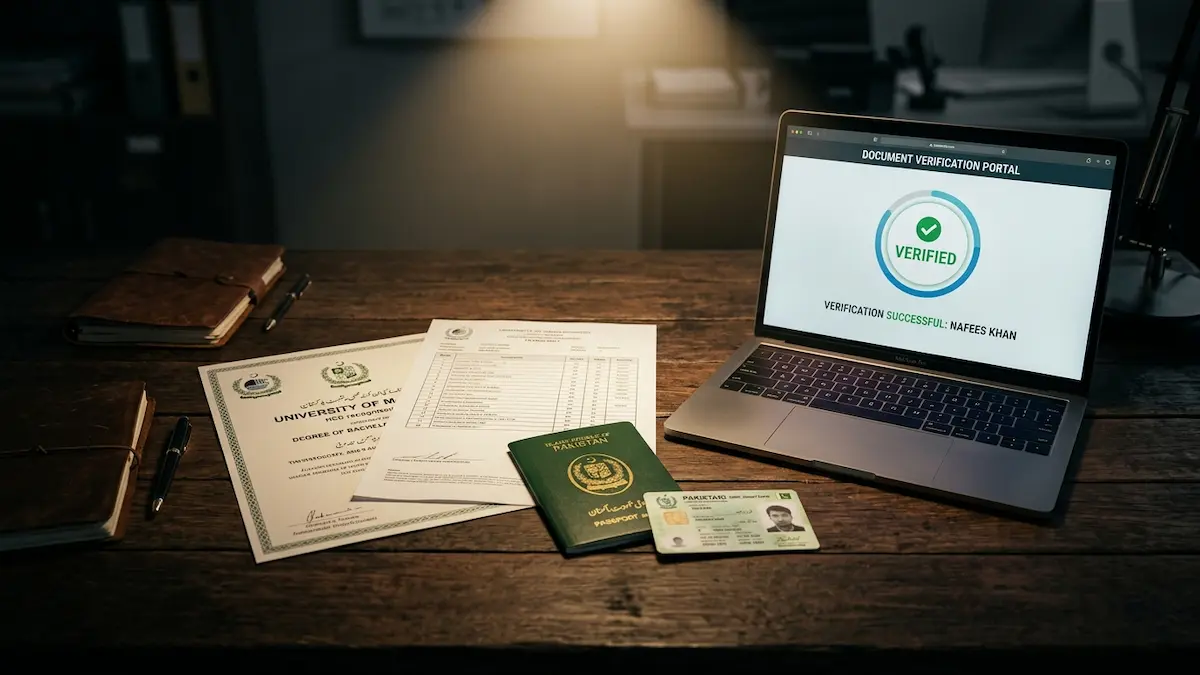
The Higher Education Commission has launched a new online system called the Degree Attestation System, or DAS. Applicants no longer need to visit HEC offices for routine attestation. Every step now happens through a digital portal.
Why HEC Launched This New Online System
The old system depended on paper files and office visits. Students applying abroad, job seekers heading to the Gulf, and overseas Pakistanis often faced long delays. A missing stamp or a slow courier could push back a visa or an admission date by weeks.
The new digital model gives every applicant one clear path. Status updates arrive by SMS and email, so people are not left guessing about their file.
How the New HEC Attestation Process Works
Step 1: Create an HEC e-Services Account
Applicants sign in through the HEC e-Services portal and choose the Degree Attestation option.
Step 2: Enter Personal and Academic Details
This includes CNIC details, degree information, and university records. HEC checks that CNIC details match academic documents exactly.
Step 3: Upload Documents
Applicants upload scanned copies of their CNIC, matric and intermediate certificates, degrees, and transcripts.
Step 4: Pay the Fee Online
Payment goes through 1 Link. Once payment is confirmed, the file moves into review.
Step 5: University Verification
The relevant university checks the applicant’s academic record directly through its own files.
Step 6: Receive the e-Attestation Certificate
Once verification is done, the applicant can download the e-Attestation Certificate from the portal.
HEC to MOFA: Understanding the Full Verification Journey
Many applicants assume HEC attestation is the final step. That is not always true. For more background on how this digital shift works day to day, see our earlier coverage of HEC’s faster attestation system.
According to the official HEC website, many international cases still need legalization from the Ministry of Foreign Affairs after HEC verification. The requirement depends on the destination country and the purpose of the document.
Old Process vs New Digital System
| Feature | Previous System | New Digital System |
|---|---|---|
| Application Submission | Physical and online mix | Fully online |
| University Verification | Manual handling | Digital verification |
| Status Tracking | Limited | Portal, SMS, Email |
| Certificate Issuance | Traditional attestation workflow | e-Attestation Certificate |
| Office Visits Needed | High | Significantly reduced |

Who Is Affected by This Change
Students
Students applying abroad often work against tight deadlines. Faster verification cuts down the waiting time during admission season.
Job Seekers
Foreign employers usually want verified academic records before signing a contract. This update comes soon after HEC’s two degrees rule for Pakistani students, which already changed how universities review academic records.
Overseas Pakistanis
Pakistanis living abroad used to rely heavily on couriers and local representatives. The digital system removes much of that dependence.
Common Mistakes That Can Delay Applications
- Name mismatch between CNIC and academic documents
- Incomplete document uploads
- Unclear scanned copies
- Incorrect degree details
- Payment verification issues
HEC sends applications with these issues back to the applicant for correction before review continues.
Timeline of Recent Changes
| Date | Development |
|---|---|
| August 2023 | Expansion of online fee payment through 1 Link |
| 2025 | Continued use of hybrid verification workflows |
| May 2026 | Launch of fully online paperless Degree Attestation System |
| June 2026 | Transition period announced for older applications |
What Happens Next
The success of this system depends on quick university responses, a stable portal, and fair handling of unusual cases. Students still planning their next move abroad may also want to check the HEC Thailand scholarship 2027 deadline for Pakistani applicants.
Frequently Asked Questions
Is HEC degree attestation now fully online?
Yes. Submission, review, university verification, and certificate issuance all happen through the portal.
Do applicants still need to visit HEC offices?
No. Routine attestation no longer needs an office visit or hard copy submission.
How much is the HEC attestation fee?
HEC currently lists the fee as Rs 3,000 per document. Applicants should confirm the latest fee on the official portal.
Is MOFA attestation still required?
In many cases, yes. HEC verification and MOFA legalization serve different purposes, depending on the destination country or employer.
Can transcripts be attested without a degree?
Yes. Transcripts can be attested before the final degree is issued, subject to verification.
Are older HEC attestations still valid?
Yes. Attestations completed before this system began remain valid and can still be verified.