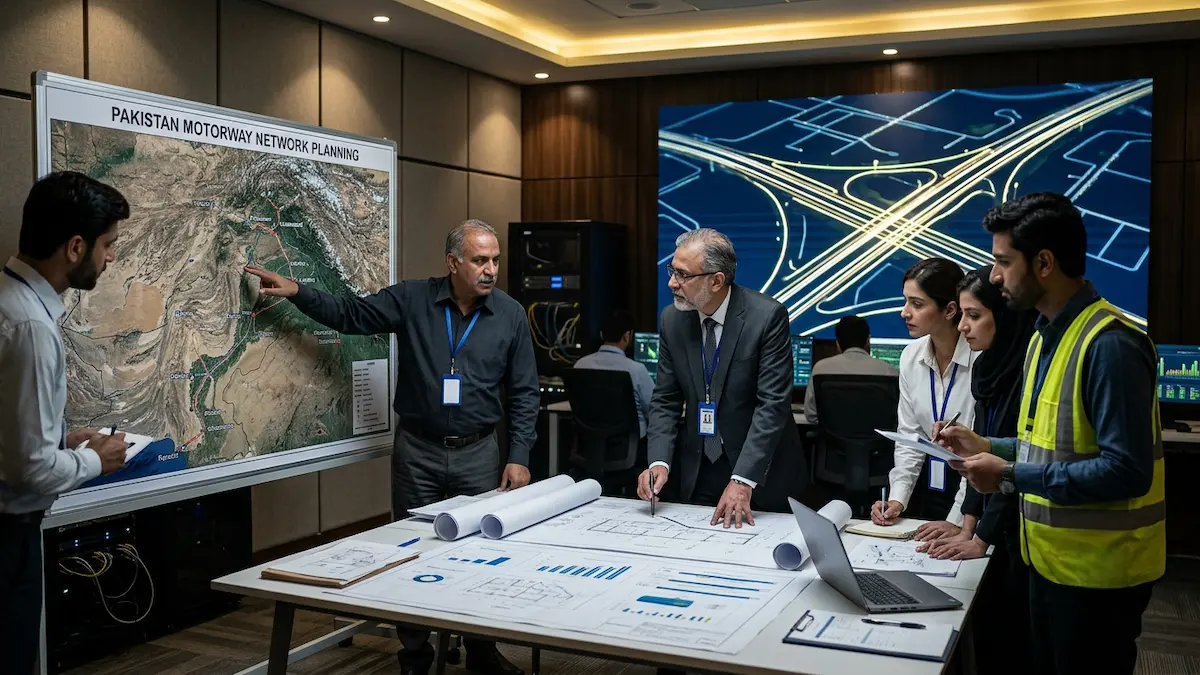
Pakistan M12 M13 Motorway Update: Two Projects, Two Different Realities
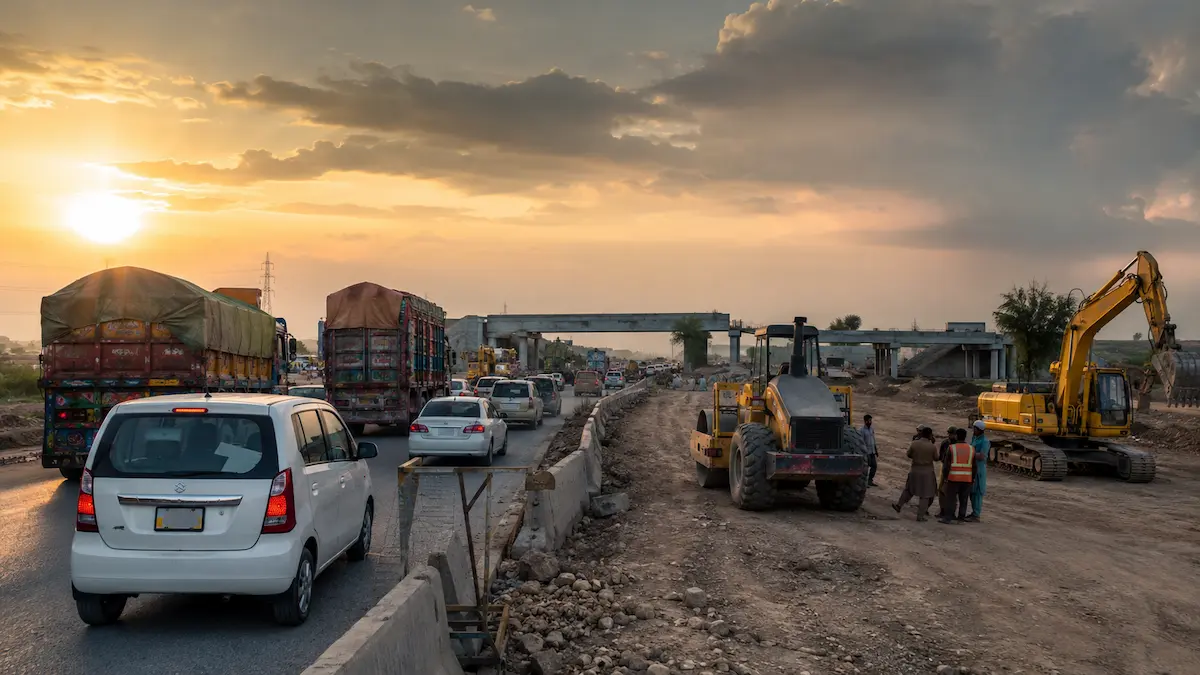
Heavy machinery has started appearing along parts of the planned motorway corridor in northern Punjab. But not every stretch is moving at the same pace.
The Kharian to Rawalpindi M13 Motorway has entered an active implementation phase. The Sambrial to Kharian M12 Motorway is still facing delays over land, funding, and route changes.
What Are the M12 and M13 Motorways?
These two projects are often mentioned together, but they are separate schemes with different timelines and different challenges.
M12 Sambrial to Kharian Motorway
The proposed M12 Motorway will connect Sambrial in Sialkot district with Kharian in Gujrat district. It is planned as a 69 kilometre controlled access six lane motorway.
One major feature is a planned bridge across the River Chenab. The route is meant to strengthen links between the industrial and export sectors around Sialkot and the wider motorway network. Construction has slowed after route changes and financing issues came up.
M13 Kharian to Rawalpindi Motorway
The M13 Motorway will extend from Kharian to T Chowk at Rawat, creating a new link toward Rawalpindi and Islamabad. It has been planned as a 117.2 kilometre six lane motorway from the start, unlike earlier proposals that considered future widening.
According to official statements from the Special Investment Facilitation Council and the National Highway Authority, the project has entered a more advanced implementation phase. This kind of progress adds to other regional connectivity efforts, including the Rawalpindi Ring Road project, which is also nearing a key construction milestone.
M12 and M13 Motorway Comparison at a Glance
| Project | M12 Motorway | M13 Motorway |
|---|---|---|
| Route | Sambrial to Kharian | Kharian to Rawat T Chowk |
| Length | About 69 km | About 117.2 km |
| Lanes | Six lane planned | Six lane from the start |
| Status | Under revision and financing updates | Awarded for implementation |
| Delivery Model | Public Private Partnership under review | Build Operate Transfer model |
| Major Challenge | Land acquisition, route changes, funding | Financing and execution |
Timeline of Key Developments on the Pakistan M12 M13 Motorway
Land acquisition activities for parts of M12 began in 2021. ECNEC approved the M13 project in January 2022 under earlier cost estimates.
Initial construction activity near Kharian on M12 started in mid 2022. Route alignment and land issues then slowed M12 progress through 2023 and 2024.
In 2025, the SIFC directed revised financing structures and six lane planning. In the most recent update, M13 was awarded for implementation while M12 continued through revised approvals.
Why M13 Motorway Is Moving Faster Than M12
Several factors explain the different pace between these two projects.
M13 now has a defined implementation structure under a Build Operate Transfer model. This allows private investment alongside government support, reducing pressure on public funds.
Planners have also shifted to building six lanes immediately instead of widening later. Officials say this can lower future expansion costs once traffic volume increases.
Coordination between the National Highway Authority, the Ministry of Communications, the Public Private Partnership Authority, and the SIFC has also helped speed up approvals for M13.
Why M12 Motorway Continues to Face Delays
Route realignment is one major issue. Sections of the proposed M12 alignment needed revision after technical concerns were raised about the Chenab bridge area.
Land acquisition across dozens of villages is another factor. Compensation and administrative approvals remain important steps before construction can move forward at full pace.
Financing is also being revised after project costs changed following updated planning and the shift to six lanes.
What This Means for Northern Punjab
If both motorways are completed, they could improve freight movement, passenger travel, and industrial logistics between Sialkot, Gujrat, Jhelum, Gujar Khan, and Rawalpindi.
Better road access also tends to affect vehicle demand in these regions. Readers tracking local transport trends may also find it useful to check updates like Pakistan’s first local 400cc motorcycle launch and the Punjab token tax discount deadline, since both relate to how residents in these districts manage vehicle costs and travel planning.
According to publicly available planning documents from the National Highway Authority (nha.gov.pk), both projects remain part of wider efforts to expand national transport infrastructure through public private partnerships.
What Happens Next for M12 and M13 Motorway Projects
M13 is expected to continue toward construction milestones under its Build Operate Transfer arrangement. Progress will depend on how quickly financing and execution stages move forward.
M12 progress will depend on how fast land acquisition, route finalisation, and revised financing are completed. As per government announcements, coordination through the SIFC is expected to continue shaping the pace of both projects.
Frequently Asked Questions
What is the difference between the M12 and M13 motorways in Pakistan?
The M12 motorway will run from Sambrial to Kharian, covering about 69 kilometres. The M13 motorway will run from Kharian to Rawat T Chowk near Rawalpindi, covering about 117.2 kilometres. M13 has moved into implementation while M12 is still under revision.
Why is the M13 motorway progressing faster than M12?
M13 has a clear Build Operate Transfer framework, six lane construction from the start, and stronger coordination between the National Highway Authority, the Ministry of Communications, and the Special Investment Facilitation Council.
What is causing delays in the M12 Sambrial to Kharian motorway?
Delays are linked to route realignment near the Chenab River crossing, ongoing land acquisition across several villages, and revised financing arrangements after project costs changed.
Which cities will benefit from the M12 and M13 motorways?
Sialkot, Gujrat, Jhelum, Gujar Khan, and Rawalpindi are expected to gain improved connectivity, along with better freight and industrial logistics access toward Islamabad.
What role does the SIFC play in these motorway projects?
The Special Investment Facilitation Council has directed revised financing structures and six lane planning, and it coordinates approvals between federal agencies to speed up strategic transport projects.
Is the M13 motorway being built under a public private partnership?
Yes, M13 has been awarded under a Build Operate Transfer model, which allows private investment alongside government support instead of relying only on public funding.